
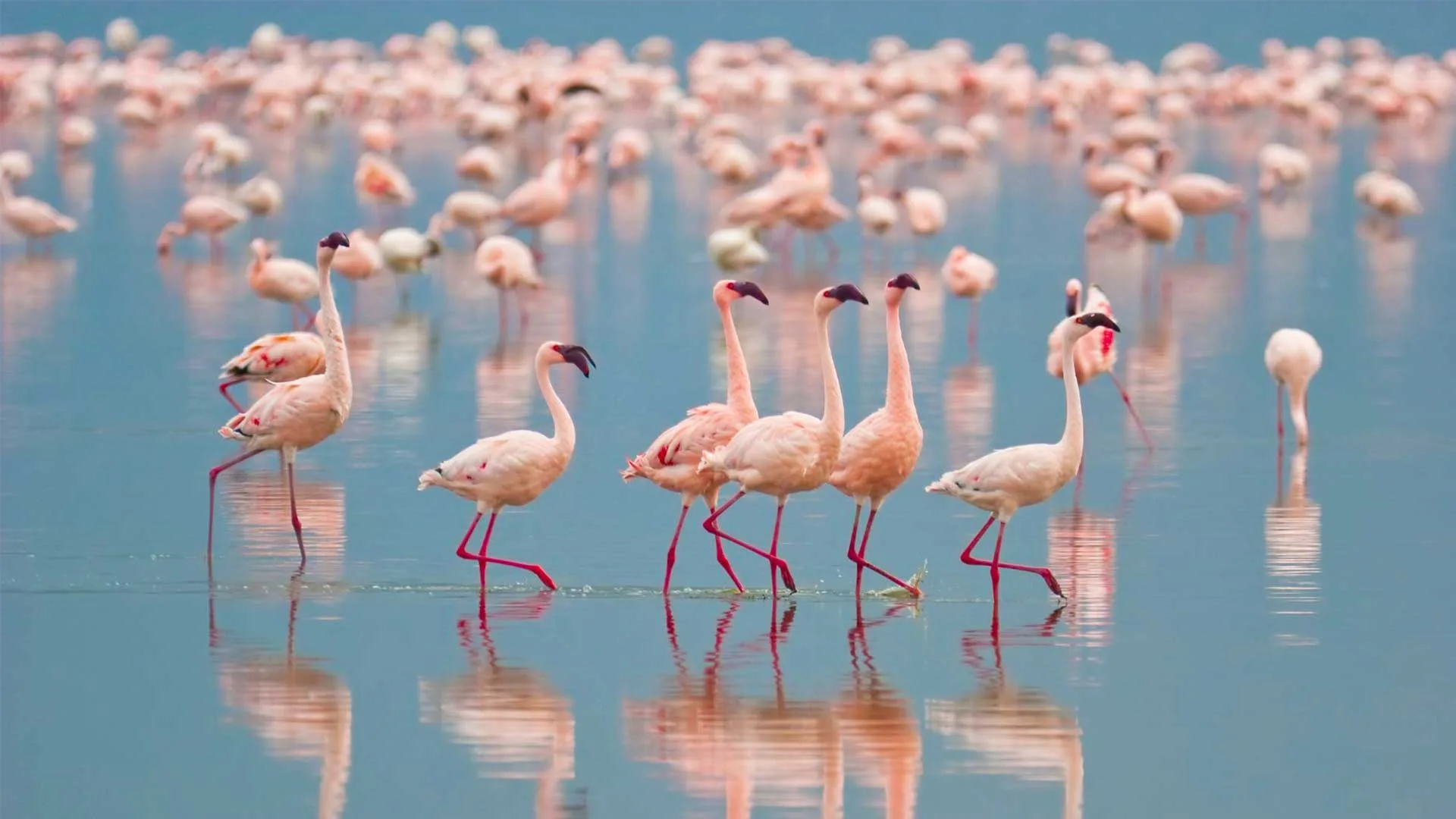
The park was gazetted in 1961 — originally as a bird sanctuary — after an ornithologist counted over one million flamingos massed on the lake's soda-encrusted shores. Those flamingos, drawn by abundant Spirulina algae, turned Lake Nakuru into one of the most photographed natural spectacles in Africa. Water levels have risen significantly since 2011 due to increased subsurface inflows, submerging parts of the lakeshore and shifting flamingo populations between Nakuru, Bogoria, and Elementaita. But the park has evolved into something equally compelling: a compact, fenced rhino sanctuary protecting both black and white rhino in numbers that make sightings near-certain. Euphorbia forest carpets Baboon Cliff's escarpment, acacia woodland shelters Rothschild's giraffe (one of Africa's rarest subspecies), and a dense concentration of leopard prowls the park's rocky kopjes and yellow-barked fever trees.
Lake Nakuru National Park wraps around a shallow alkaline lake in the floor of the Great Rift Valley, covering 188 square kilometres at an altitude of 1,754 metres.
Discover the wild heart of Lake Nakuru
Explore Kenya Safaris →Best Time to Visit
Year-round destination. June to September is the dry season with the clearest wildlife viewing. Flamingo numbers are unpredictable and depend on water chemistry — check recent reports. The short rains (November) and long rains (April-May) bring migrant birds and lush scenery.
What You'll See
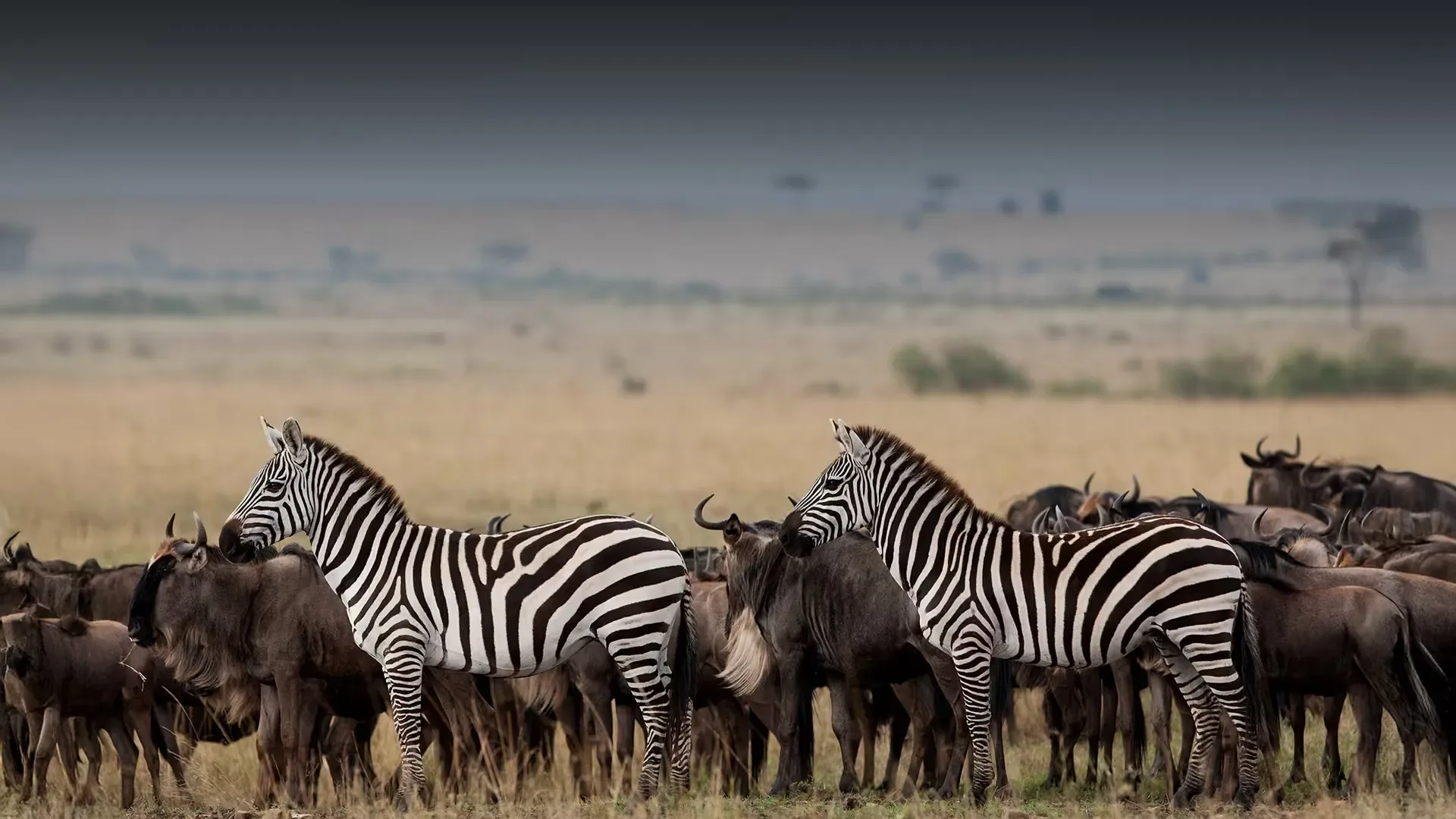
Around 70 white rhino and 30 black rhino make Nakuru one of Kenya's best rhino-viewing parks. Rothschild's giraffe (introduced from western Kenya), leopard, lion, Cape buffalo, waterbuck, and eland. When conditions are right, lesser flamingos can number in the hundreds of thousands. Over 450 bird species recorded including great white pelicans, African fish eagle, and Goliath heron.
Getting There
Lake Nakuru is 156 km northwest of Nairobi (approximately 2.5 hours via the A104 highway and the Naivasha bypass). There is a small airstrip at Naishi within the park for charter flights. Most visitors combine Nakuru with Lake Naivasha and the Masai Mara in a classic safari circuit.
Find Lake Nakuru
Let our Kenya specialists plan the perfect route to Lake Nakuru. Every safari is tailored, every operator is verified.
Lake Nakuru, Kenya
Where to Go in Lake Nakuru
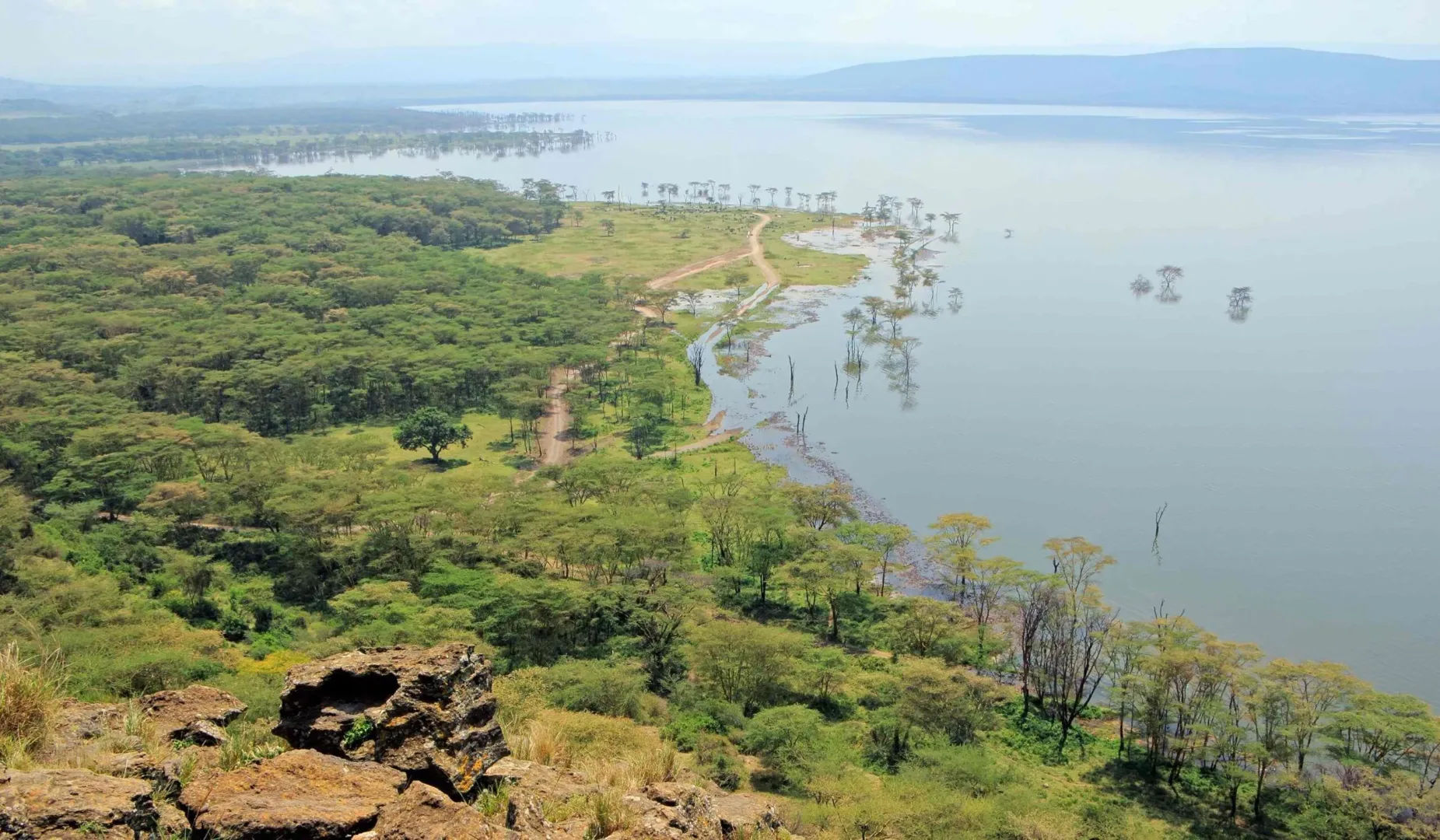
Baboon Cliff Viewpoint
The most spectacular Rift Valley viewpoint in Kenya — the entire lake spread out 150 metres below.
Baboon Cliff rises on the western edge of Lake Nakuru, offering what many consider the single best viewpoint in any Kenyan national park. From the cliff's edge at 1,900 metres, the entire lake spreads out below — a shimmer of pink when flamingos are present, ringed by the Rift Valley escarpment. Troops of olive baboons forage along the cliff road, and Verreaux's eagles nest on the rock faces. The euphorbia forest on the approach is one of the largest stands of candelabra euphorbia in East Africa.
Explore Baboon Cliff Viewpoint →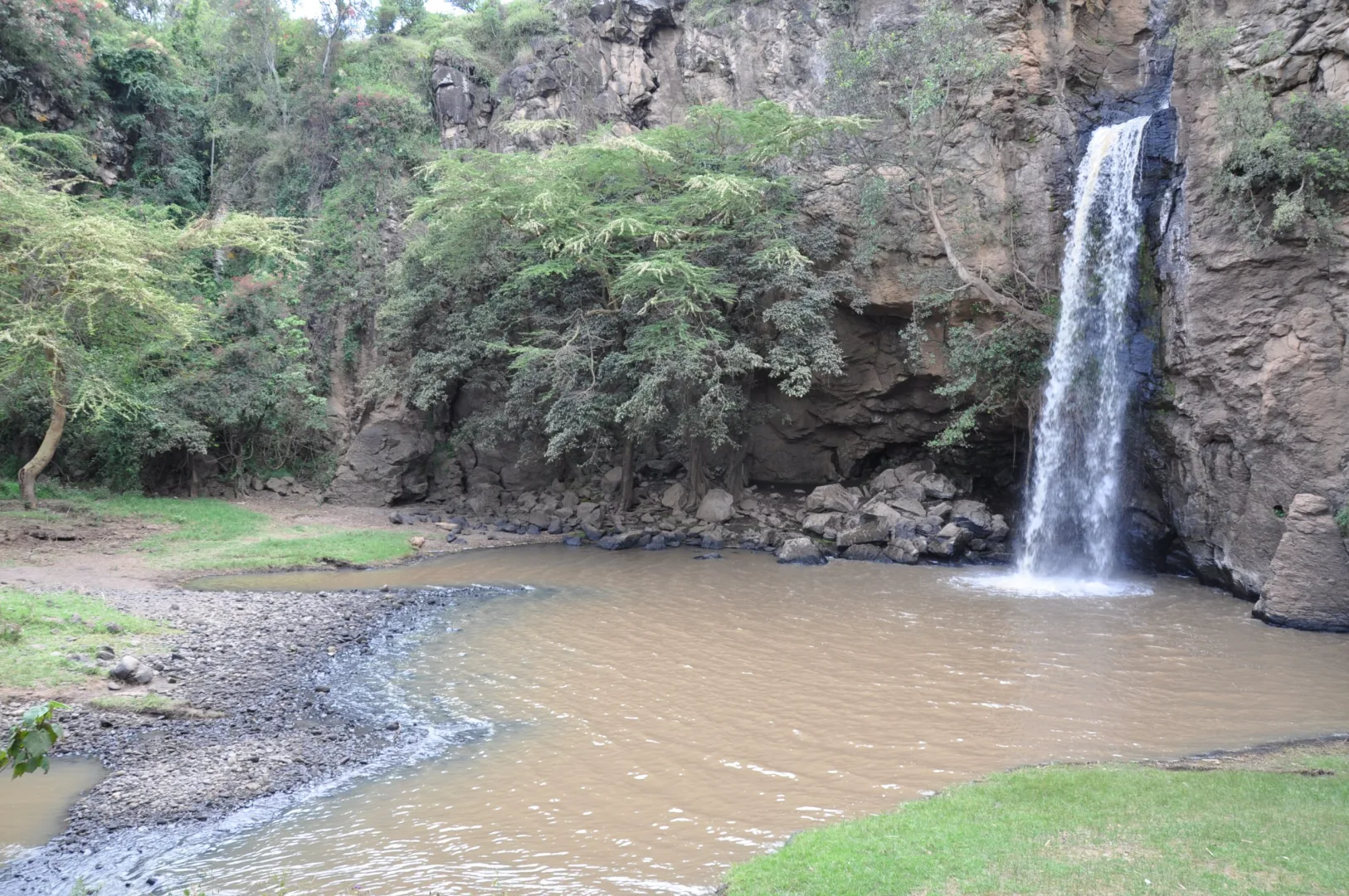
Makalia Falls & Southern Shore
The park's quietest corner — rhino country with seasonal waterfalls and open lion grasslands.
The southern sector of Lake Nakuru is quieter and wilder, centred around the Makalia River which cascades over a small waterfall during the rains. This area's dense woodland and grassland mosaic is prime rhino territory — both black and white rhino are frequently sighted along the Makalia circuit. The southern lakeshore also attracts large herds of waterbuck, and the open grasslands between Makalia and Nderit Gate are one of the best spots in the park for lion.
Explore Makalia Falls & Southern Shore →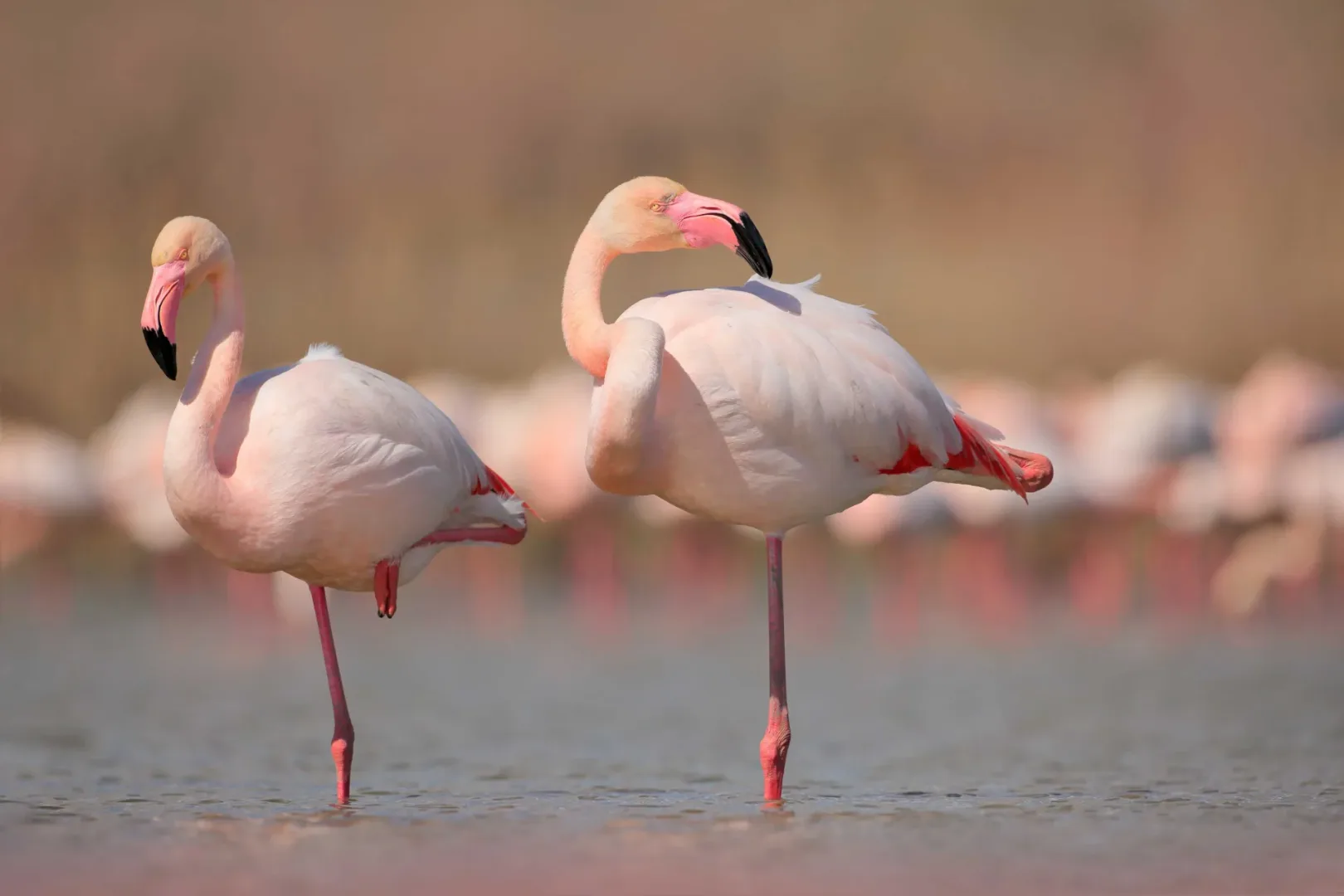
Lake Elementaita
A UNESCO-listed soda lake that quietly steals Nakuru's flamingos — serene, uncrowded, and photogenic.
Lake Elementaita lies 20 kilometres southeast of Nakuru, a smaller Rift Valley soda lake designated a UNESCO World Heritage Site as part of the Kenya Lake System. When flamingos shift from Nakuru due to rising water levels, Elementaita often becomes the beneficiary — hosting vast flocks of both lesser and greater flamingos. The lake's shores are dotted with hot springs, and the surrounding Soysambu Conservancy protects Rothschild's giraffe, zebra, and over 400 bird species. Several lodges on Elementaita's shores offer a quieter alternative to Nakuru.
Explore Lake Elementaita →Lake Nakuru Safari Tours
Other Kenya Destinations
Masai Mara National Reserve
Africa's most famous reserve — Great Migration river crossings, 850 lions, and the pioneering conservancy model.
Read Guide →Amboseli
Africa's most iconic elephant herds framed by the snow-capped summit of Kilimanjaro.
Read Guide →Amboseli National Park
Africa's most iconic photo — big-tusked elephants framed by Kilimanjaro's snow-capped peak.
Read Guide →Samburu National Reserve
Kenya's arid frontier — the Samburu Special Five species found nowhere else on a classic safari circuit.
Read Guide →Ready to Explore Lake Nakuru?
Browse our curated Kenya safaris — every tour is operated by a verified local specialist and secured through Inspiration Africa.
Find Your Perfect Safari